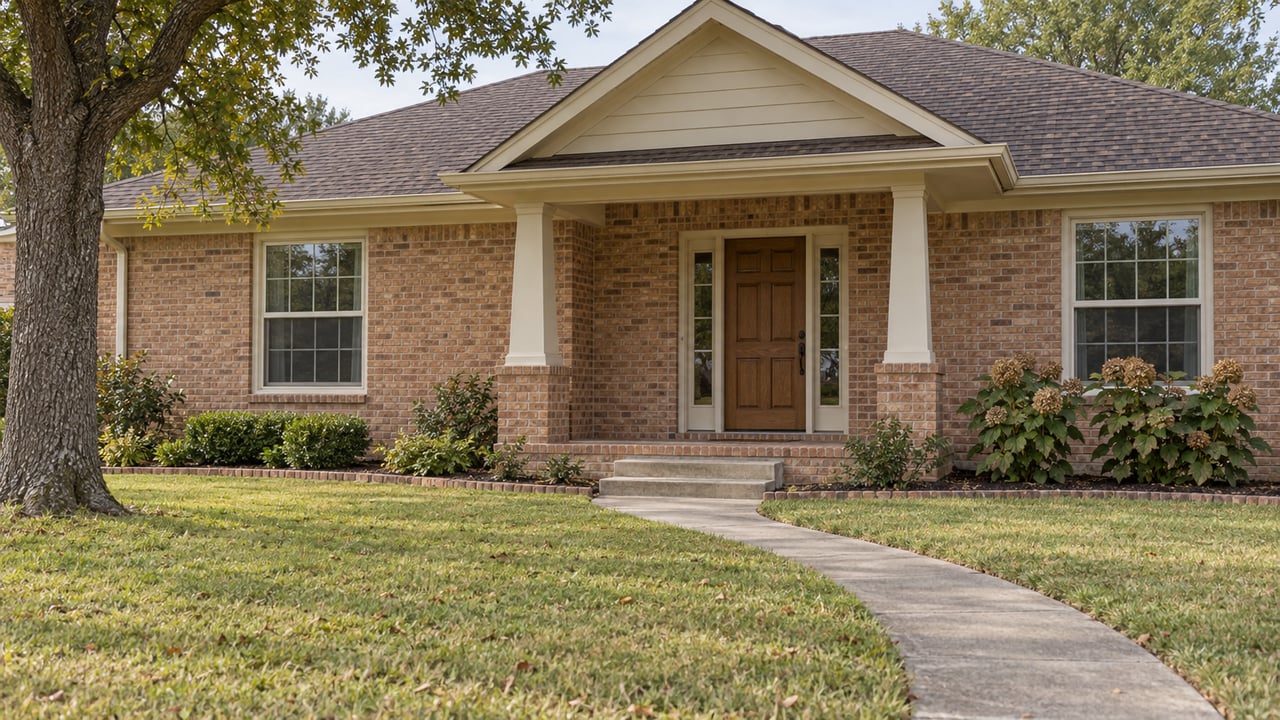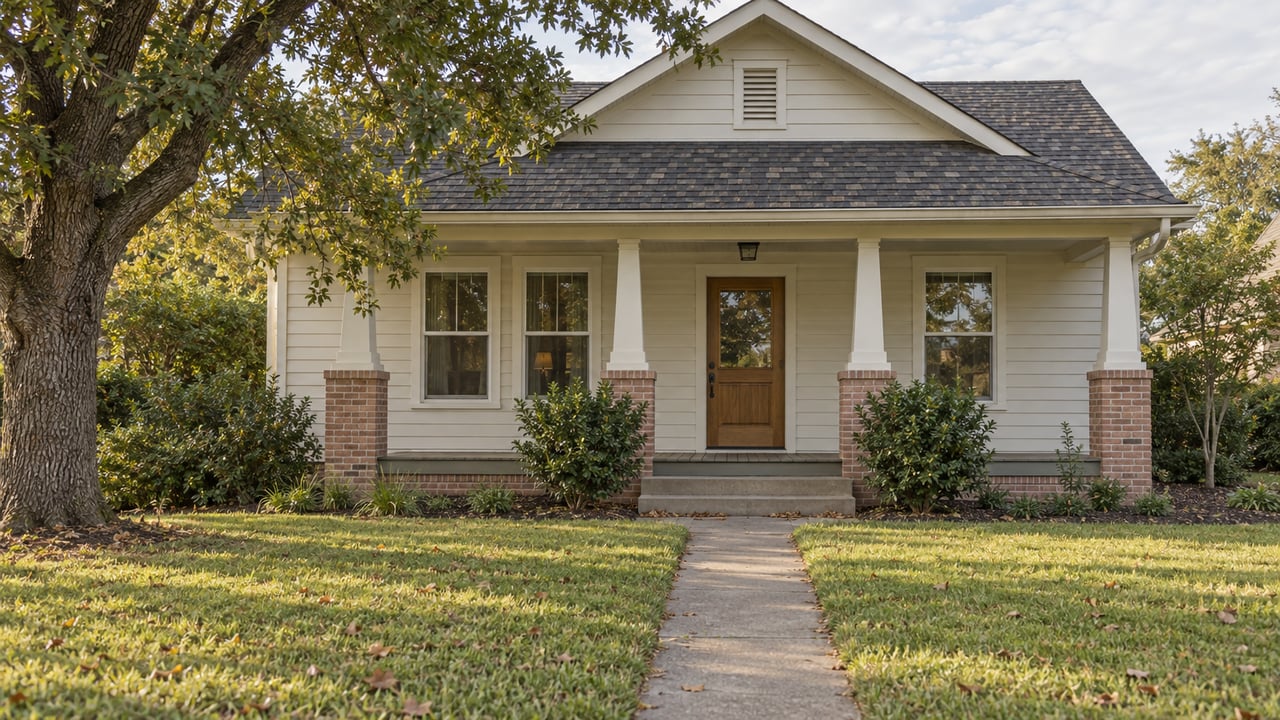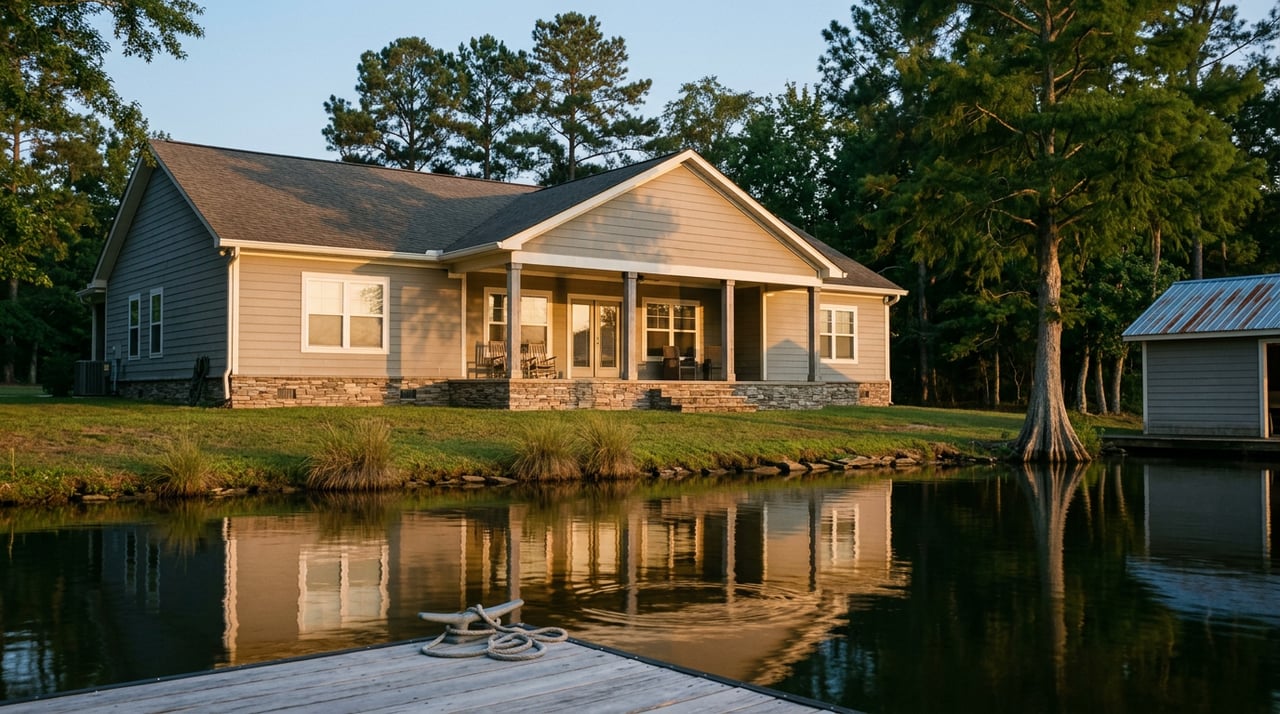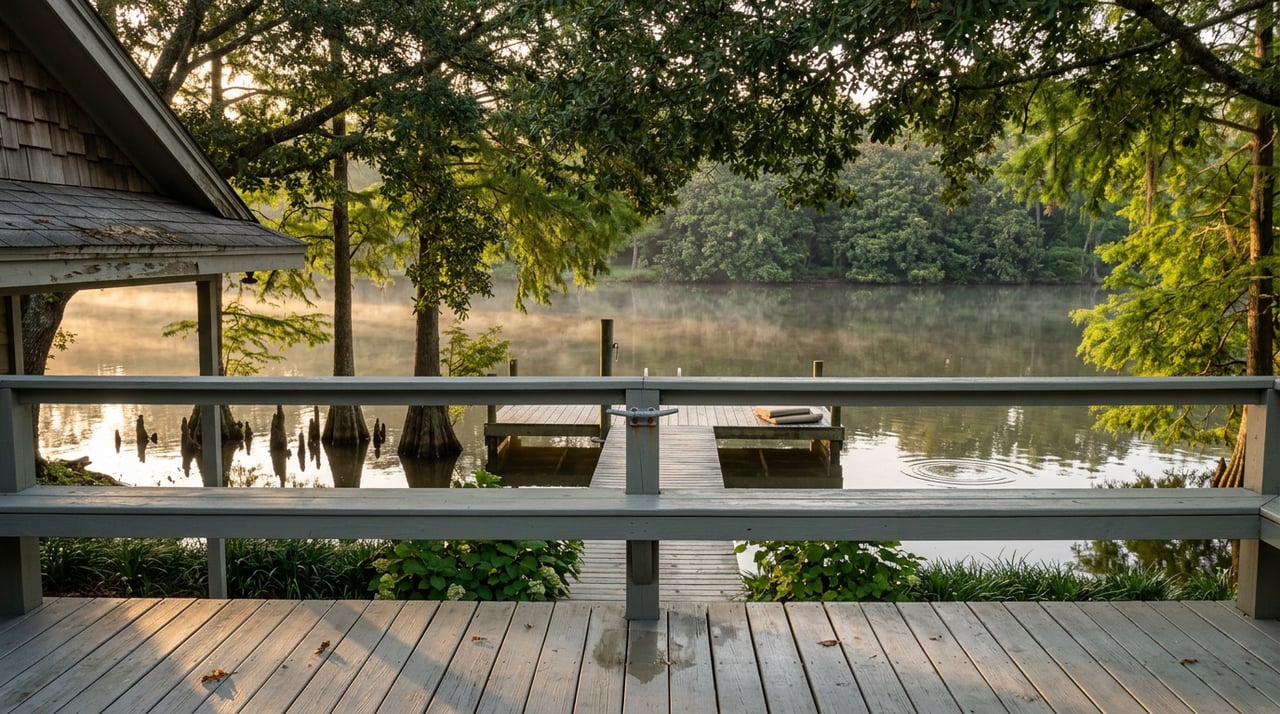
Two docks sit less than half a mile apart on Lake Tyler East. Same water, same depth, same bass swimming under both piers. One property's listing address reads Troup, Texas. The other reads Arp, Texas. A buyer scrolling through listings might assume the difference is cosmetic, a quirk of which post office serves which mailbox. It isn't. One of those lots falls inside Troup's extraterritorial jurisdiction, where the city reviews and approves subdivision plats. The other falls under Smith County's direct authority, where the county handles that review instead. Different office, different process, different timeline if either lot ever gets re-platted or subdivided again.
That distinction rarely shows up in a listing description, but it shows up the moment you try to do anything with the land beyond living in the house that's already built on it.
One Town, Two Counties
Troup itself is an unusual case before you even get to the lake. The city's limits sit mostly in Smith County but extend south into Cherokee County, making it one of the few towns in this stretch of East Texas that operates as a single municipal government spanning two county lines. That matters for anyone buying inside city limits, because Troup spans two counties. Two homes on the same street, both inside Troup, can technically sit in different counties.
Lake Tyler East compounds the same pattern on a smaller scale. According to Smith County's own subdivision regulations, authority over new plats and developments varies by exactly the kind of small town or unincorporated pocket your parcel sits in. Troup holds city-controlled authority over subdivisions inside its jurisdiction. Arp, a few miles up the shoreline, does not. Development there falls to Smith County directly. Tyler's own reach splits the same way internally, with one zone under city control and another left to the county.
Here's what that grid looks like, pulled straight from the county's subdivision regulations document:
| Community | Subdivision Regulation Authority |
|---|---|
| Troup | City controlled |
| Arp | Smith County |
| Tyler Zone 2 | City controlled |
| Tyler Zone 3 | Smith County |
None of this shows up as a line item in a listing. It shows up later, if you ever want to split a lot, add a second structure, or plat raw acreage into buildable parcels. The rulebook you're working under depends on which box your address falls into, not on how the lake looks from your dock.
What "City Controlled" Actually Buys You
Troup's newest subdivision, Waterfowl Estates, is a useful example of what city-controlled actually means in practice. The development has 27 lots inside Troup's jurisdiction.
Neither approach is better on its face. But you can't tell which one you're getting from the price or the photos. You have to know to ask.
Existing lakefront communities carry their own version of this same local logic. Some of the established subdivisions ringing Lake Tyler East operate their own informal membership structures rather than a full-blown HOA. One waterfront subdivision on the lake charges $75 a year for access to a shared pavilion, two boat launch areas, and two helipads reserved for emergencies. That fee has nothing to do with city or county authority. It's a private arrangement among neighbors, layered on top of whichever government actually regulates the land underneath them. A buyer comparing two lake lots needs to untangle both layers, the public jurisdiction and the private neighborhood agreement, to understand what they're actually paying for.
The School District Assumption That Doesn't Hold
Buyers moving from a larger metro often assume a single-high-school rural district means a weaker academic option. Troup Independent School District, which serves the city and the surrounding lake communities regardless of which county a given address falls in, complicates that assumption. Troup High School ranks 273rd out of 1,987 ranked high schools statewide according to SchoolDigger's most recent data, earning a 4-star rating with a 100 percent four-year graduation rate. That's not a fluke ranking. It's a small district doing more with its single high school than its size would suggest.
The picture isn't uniform across every campus in the district, though, and a buyer doing real diligence should know that too. Troup Middle School's SchoolDigger rating has slipped from 4 stars to 3 stars over the past two years, with softer results in math specifically. A family choosing a lake lot based on the district's reputation should look at the campus their kids would actually attend, not just the headline number for the high school down the road.
What This Means If You're Actually Comparing Two Lots
Say you're looking at two waterfront properties on Lake Tyler East this month, one listed under Troup and one under Arp, both in a similar price range. As of August 2026, Troup's own listing data put the median list price for homes in the city around $375,000, though portal estimates for the broader area have ranged considerably depending on the source and the month. Part of that spread is the usual noise of a Texas non-disclosure market. Part of it, on this particular lake, is simply that "Troup" and "Arp" aren't describing two different markets so much as two different regulatory regimes wrapped around the same shoreline.
Before you anchor a decision to the mailing address on either listing, it's worth checking a short list of things the address alone won't tell you:
- Which county the parcel is in, since Troup itself straddles Smith and Cherokee counties
- Whether the lot falls under city-controlled or county-controlled subdivision authority, which determines who you'd deal with for any future re-plat or build-out
- Which specific campus within Troup ISD serves that address, not just the district's overall reputation
- Whether the property carries a private lake-access fee or membership on top of standard property taxes
- Whether utilities run to the lot already or the property depends on a septic system, since that affects both build cost and insurance underwriting down the line
None of these show up in a search filter. They show up in a title report, a call to the appraisal district, or a conversation with someone who's walked this shoreline before.
FAQ
Does living on the Troup side of the lake mean lower property taxes than the Arp side? Not automatically. Tax rates depend on which county and which taxing entities apply to a specific parcel, not on the lake itself. The only way to know for certain is to check the parcel against the relevant county appraisal district.
Is Waterfowl Estates the only new development on this part of the lake? Waterfowl Estates has 27 lots inside Troup's own city limits. Other individual lots and older subdivisions around the lake, including East Shore Estates, continue to see listings independent of that new development.
Should the county line running through Troup itself worry a buyer who isn't near the lake at all? It's worth a quick check either way. Any property inside Troup city limits benefits from checking which county it falls in, lake access aside.
If you're weighing a lake lot in this corridor and want someone who already knows which office to call for which parcel, Norton Property Group can walk the comparison with you before you write an offer. Get Your Free Home Valuation and let's figure out which side of the line actually makes sense for what you're trying to do.
This article is general information, not legal, tax or financial advice. Consult a qualified professional about your situation.